
Introduction
What if we could ablate a brain tumor without needing to cut into the brain? There are currently many techniques being developed that would non-invasively treat brain tumors. One of these technologies is a high-intensity focused ultrasound that has recently been approved by the FDA for the treatment of essential tumors.
There are more than 120 different types of brain tumors that differ in the type of cells that they are made of and where they occur. Brain tumors may be benign (noncancerous) or malignant (cancerous). Treatment options for brain tumors depend on the individual’s symptoms, preferences, along with the type, size and location of the tumor.
Some examples of treatment options include surgery, radiation therapy, chemotherapy and drug therapy. Multiple factors, such as the brain’s natural defenses and the blood-brain barrier (BBB) pose a major hurdle for the treatment of brain tumors. As well, if the tumor is near a delicate part of the brain, surgery may be difficult. Transcranial ultrasound stimulation (TUS) is an emerging technique and approach to non-invasively treat brain tumors. TUS can be used with converging methods of treating brain tumors.
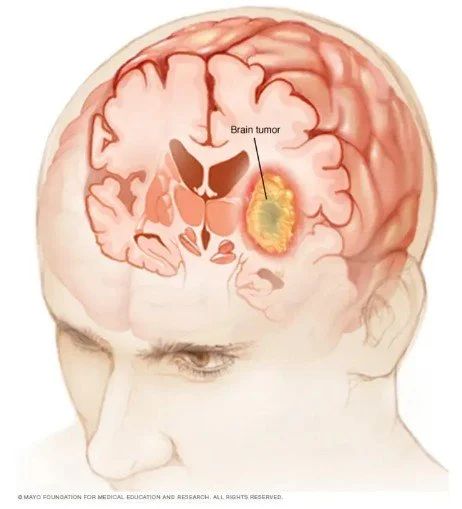
Figure 1: Brain Tumor — A growth of cells that occur near or within brain tissue.
What is TUS?
Transcranial ultrasound stimulation (TUS) is an emerging technique that is non-invasive and has good spatial resolution. TUS is a hemispherical phased-array transducer that produces ultrasonic frequency. Ultrasonic frequency is anything above human hearing, which is about 20,000 hertz.
TUS has many different applications within neuroscience. At low intensity (< 100 W/cm2), TUS delivers short bursts of sonic waves to affect the voltage-dependent neural circuits in the brain. The tool can modulate neural circuits by inhibiting or exciting neural activity. The process of neuromodulation can assist in modulating symptoms of neurodegenerative diseases, strokes or epilepsy. Medium intensity (100–200 W/cm2) ultrasound has been used to increase the opening of the blood-brain barrier. High intensity (> 200 W/cm2) focused ultrasound has the ability to induce permanent lesions and treat some essential tumors.
How does TUS work to treat brain tumors?
There has been an increasing amount of research in how transcranial ultrasound stimulation can be used to treat brain tumors or increase the efficacy of other treatment options.
By focusing ultrasound waves at a single point and at a high intensity, TUS can ablate tumors or cause permanent lesions. This can occur through thermal ablation or the coagulation of cellular proteins. Thermal ablation occurs by projecting an ultrasound beam into the brain, resulting in elevated tissue temperatures within the focal zone or around the tumor.
Transcranial ultrasound stimulation can also be used to assist in drug delivery. The blood-brain barrier (BBB) is a layer of blood vessels that filter the blood flowing into the brain. The barrier makes it harder for some substances, such as anticancer drugs to enter the brain. BBB is a major obstacle limiting the therapeutic efficacy of drugs to treat brain tumors. TUS at a medium focused intensity can increase opening of the blood-brain barrier for drug delivery. One study has shown that TUS can enhance CNS drug delivery by opening the BBB in animal models, along with enhancing both innate and adaptive immunities. Strong innate and adaptive immunities are essential to orchestrate an antitumor response.
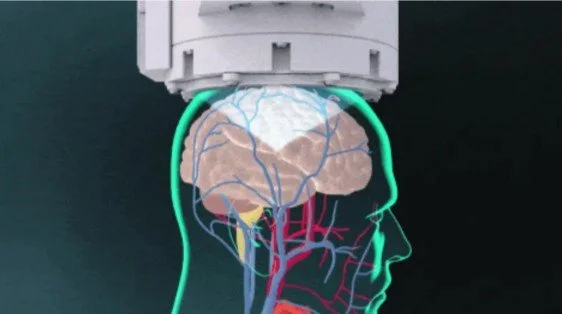
With the ability for TUS to thermally ablate brain tumors and increase the efficacy of other treatment options, TUS acts as a promising technique for patients. NaviFUS is a new TUS device that transcranially delivers ultrasonic energy into deep tissues of the brain, while being guided by a neuro navigator. The device is mobile, not limited to the operation room, has a short procedure time (<30 min) and is cost effective. NaviFUS has been approved by the FDA .
What is the procedure of NaviFUS?
I hope you found this blog informative. Remember that treatments for brain tumors differ based on their characteristics. Always consult with a doctor about the most appropriate treatment options.
-Jordy
References
https://brainbox-neuro.com/techniques/tus
https://www.fusfoundation.org/diseases-and-conditions/brain-tumors-glioma-and-metastatic/
https://pmc.ncbi.nlm.nih.gov/articles/PMC7080303/
https://www.mayoclinic.org/diseases-conditions/brain-tumor/symptoms-causes/syc-20350084